Tech stack
Frontend
Next.js 15 (App Router)
Styling
Tailwind CSS + Shadcn UI
Backend
Next.js (Full-Stack)
Database
Supabase (PostgreSQL + Auth)
Authentication
supabase-auth
Performance Metrics & Potential
Market Context & Definition
SaaS, AI Agent, B2B/Creator
Solopreneurs, Founders, Marketing Managers
Brand management is fragmented, slow, and expensive. Real-time adaptation is impossible for humans.
Lumina is an AI-first operating system for digital brands that scales your presence beyond human limits. Built for solopreneurs, creators, and small direct-to-consumer (D2C) brands, Lumina acts as your artificial CMO: it monitors global trends, creates on-brand content, and adapts your strategy in real time—so you can focus on your product while your brand runs on autopilot.
Traditional brand tools force you to manually plan content, chase trends, and keep a consistent voice across channels. Lumina flips that model: it continuously watches market pulse, competitor moves, and audience sentiment, then proposes and executes a coherent brand strategy. The result is a single command center where your brand's health, reach, and creative output are visible at a glance—and where AI handles the heavy lifting of content creation and strategy adjustment. Whether you're launching a new brand or scaling an existing one, Lumina delivers autonomous brand management, content creation, and social media automation so you stay relevant without the daily grind. The app answers a critical need: professional, consistent brand presence and data-driven marketing decisions without hiring a full team or spending hours each week on manual tasks.
Market Pulse Monitoring — Autonomous monitoring of global trends, viral content, and competitor shifts. Lumina keeps your brand aligned with what's working now, so you can capitalize on opportunities and avoid stale messaging. The system tracks signals across social platforms and the broader web, surfacing actionable insights so you're always one step ahead.
Autonomous Asset Engine — Generates cross-platform creative assets—social posts, ad creatives, and visual content—that adhere to a consistent brand voice and guidelines. No more starting from a blank canvas or juggling multiple tools. Output is tailored to each channel (e.g., Instagram, Twitter, Meta) while maintaining a unified brand identity.
Sentiment-Driven Strategy — Adjusts brand messaging and tactics based on live user reactions and feedback loops. Your communications stay responsive and relevant as your audience evolves. When sentiment shifts or new pain points emerge, Lumina helps you pivot messaging and creative direction quickly.
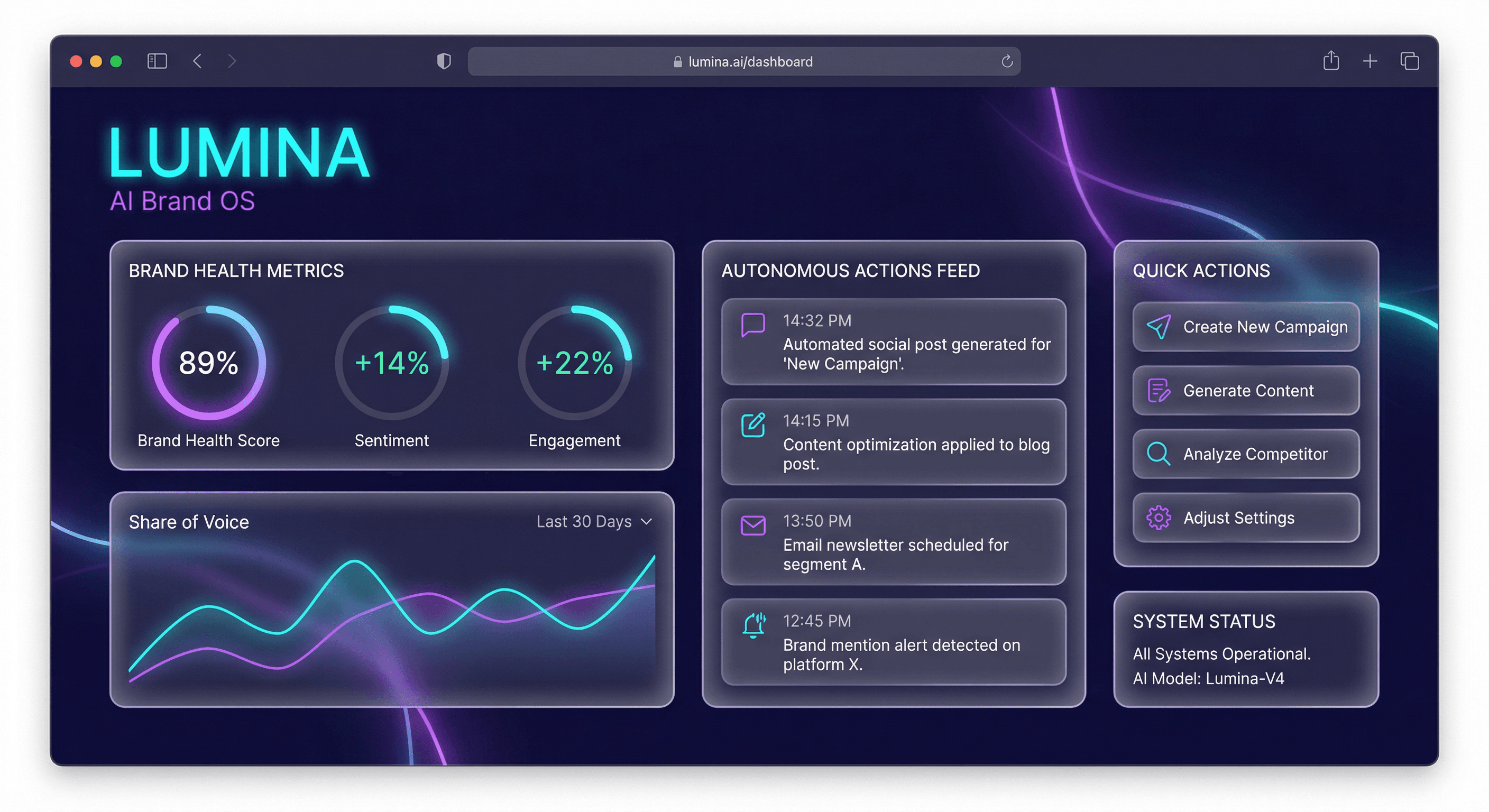
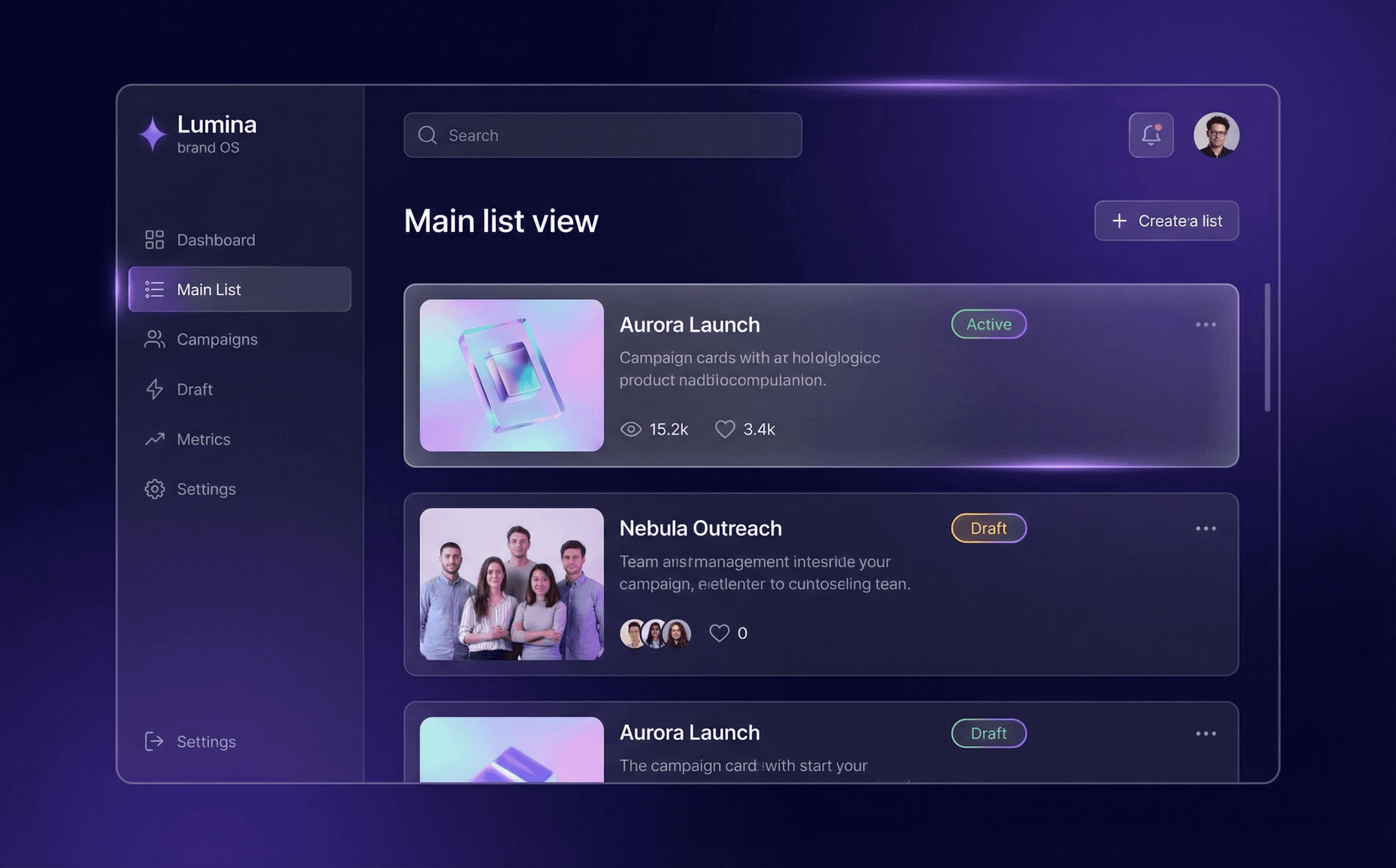
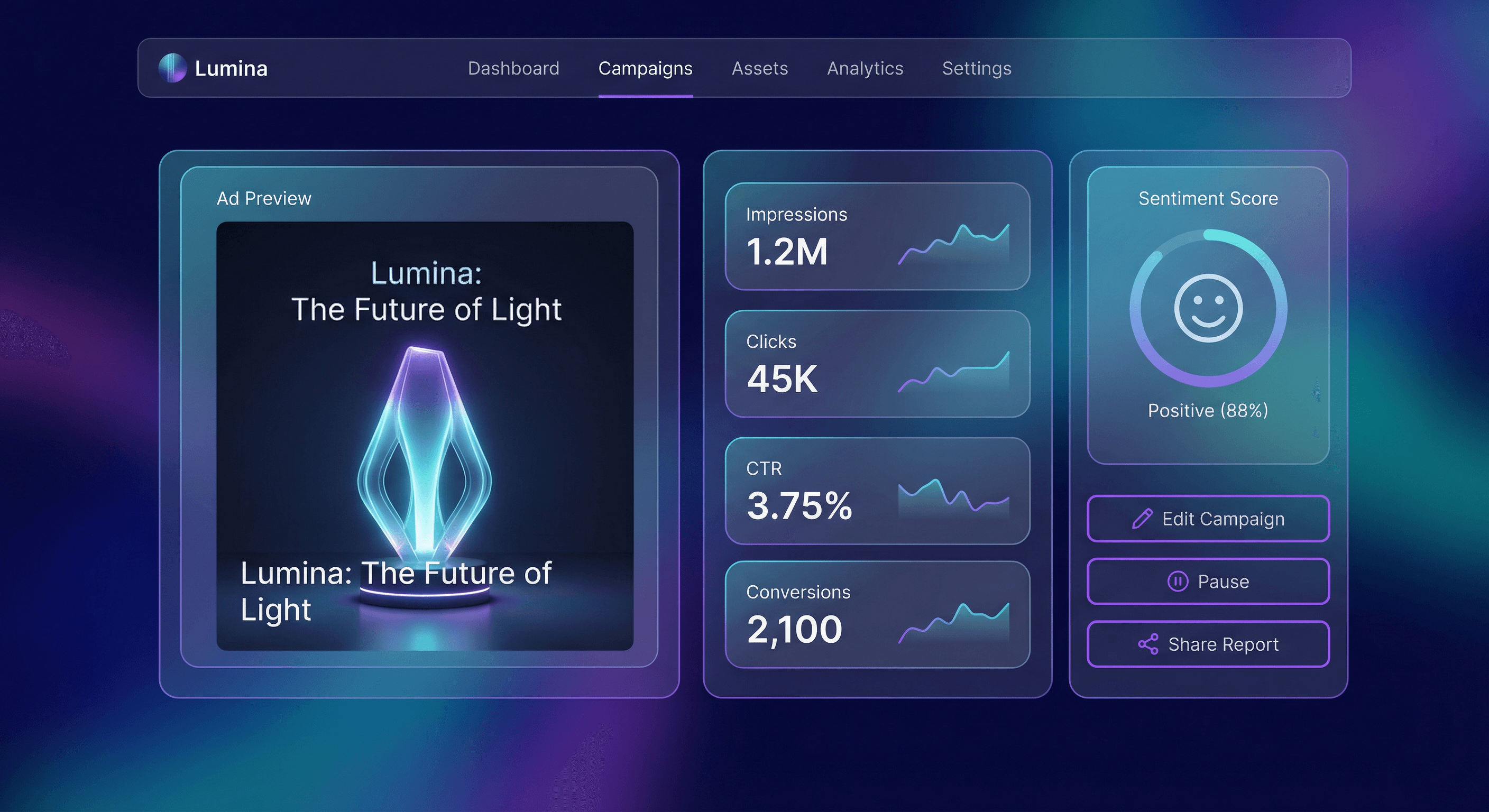
The Brand Dashboard — A glassmorphism-inspired overview of your brand's health, reach, and every autonomous action. Review and approve in minutes instead of hours, with full visibility and control. Metrics, proposed content, and trend alerts are organized in one place for fast decision-making.
Lumina is built for digital solopreneurs, content creators, and small D2C brand owners who want professional brand presence without a full marketing team. If you need AI brand management, trend monitoring, creative automation, and sentiment analysis in one place, Lumina is your CMO-in-a-box. Ideal for anyone seeking brand consistency, social media automation, and data-driven strategy without the complexity of enterprise tools. Perfect for indie makers, e-commerce brands, and creator-led businesses ready to scale their brand on autopilot.
Lumina combines CMO-level strategy with the simplicity of a single dashboard. You get autonomous marketing, multi-platform content generation, and real-time trend and sentiment analysis—all optimized for discoverability and performance. Keywords: AI brand management, autonomous marketing, content creation, digital brand OS, CMO assistant, trend monitoring, brand consistency, solopreneur marketing, D2C brand tools, social media automation, sentiment analysis, creative automation, brand health dashboard, multi-platform content, marketing autopilot.
Get an entire project plan for this application—with task lists that detail every step of the development process.
Open this project in your favorite IDE and tell your AI assistant to go to work. The ProVibes AI Task Manager instructs any LLM on how to execute every step.
Visual Product Identity
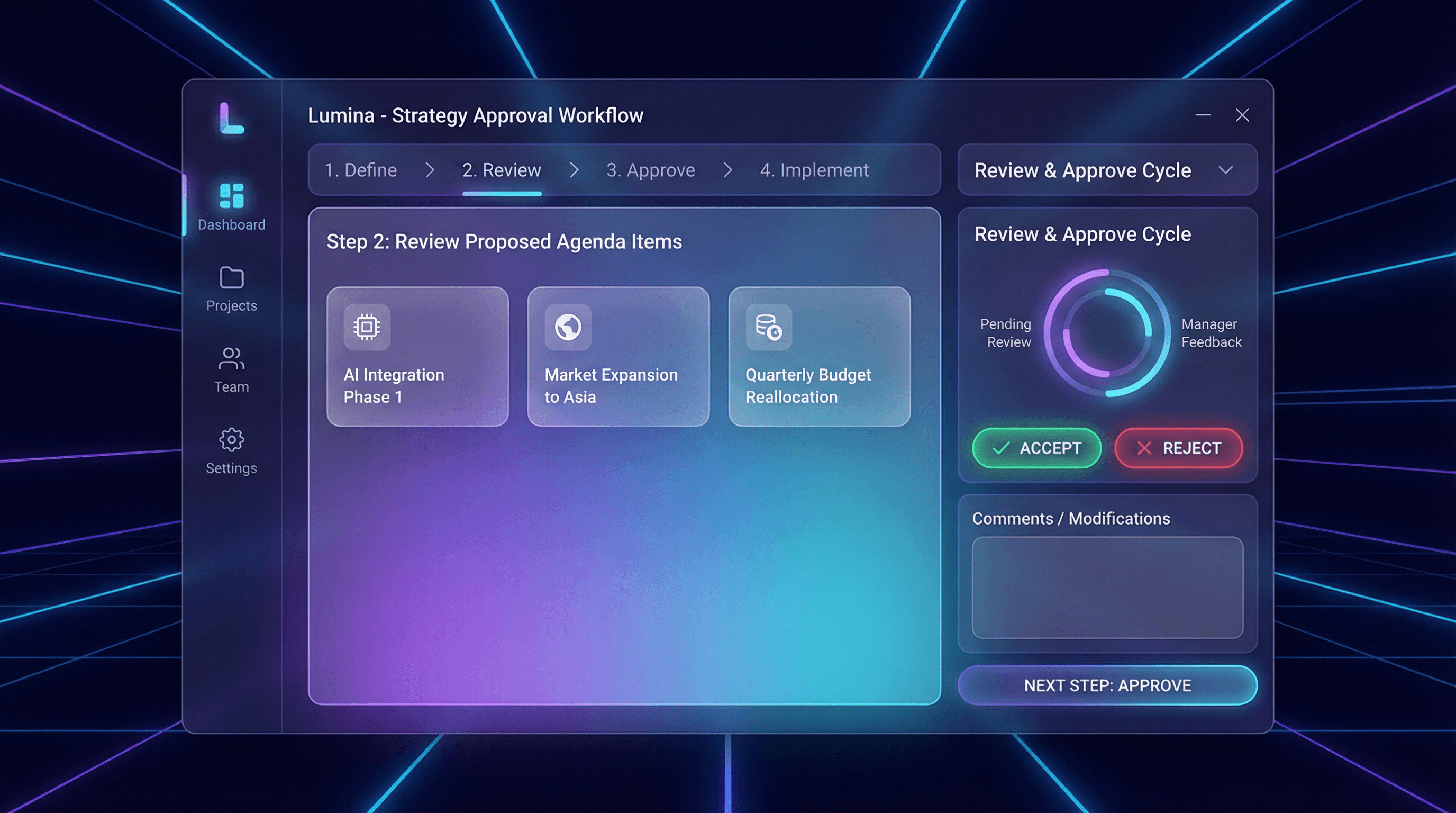
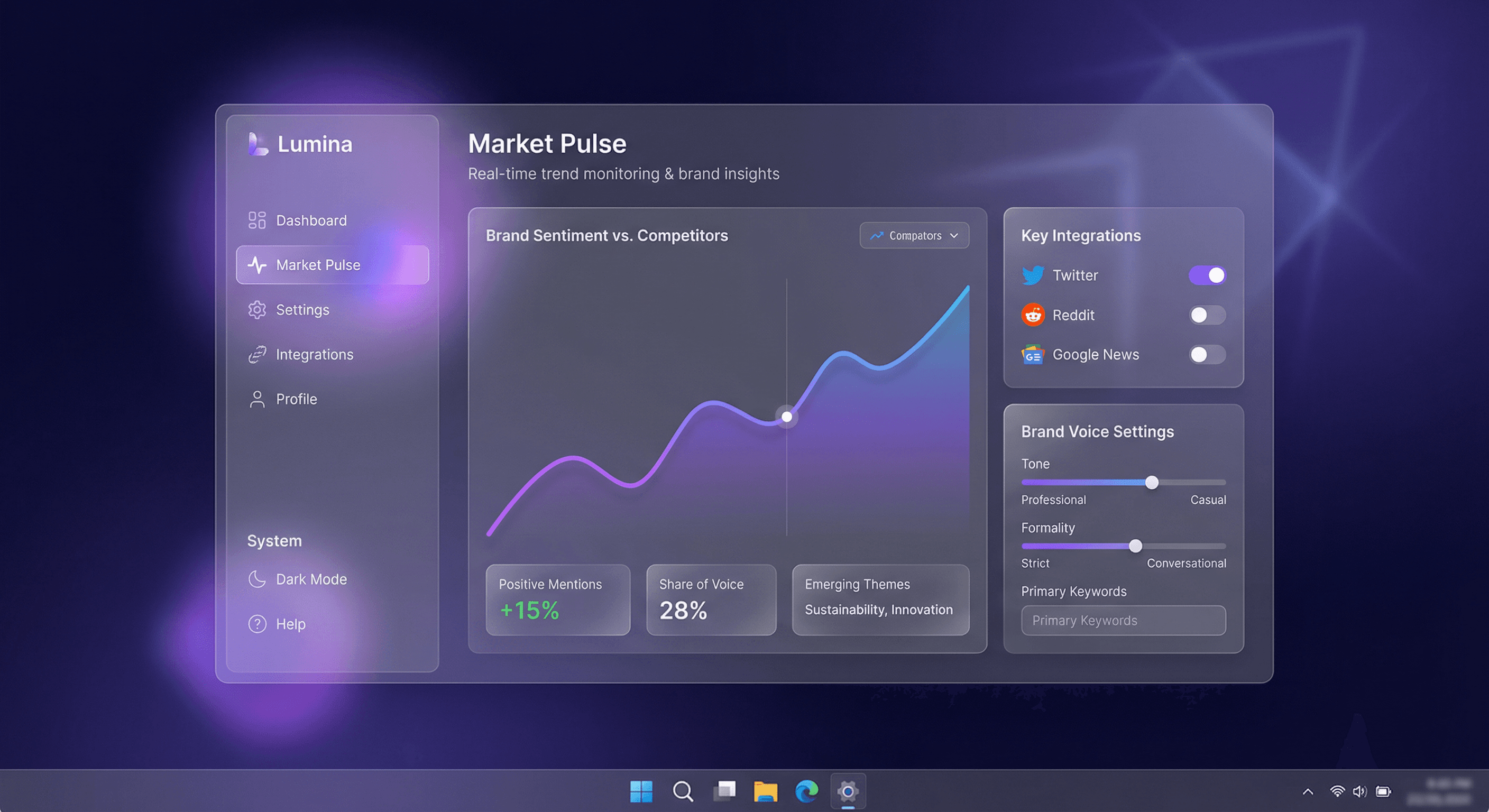
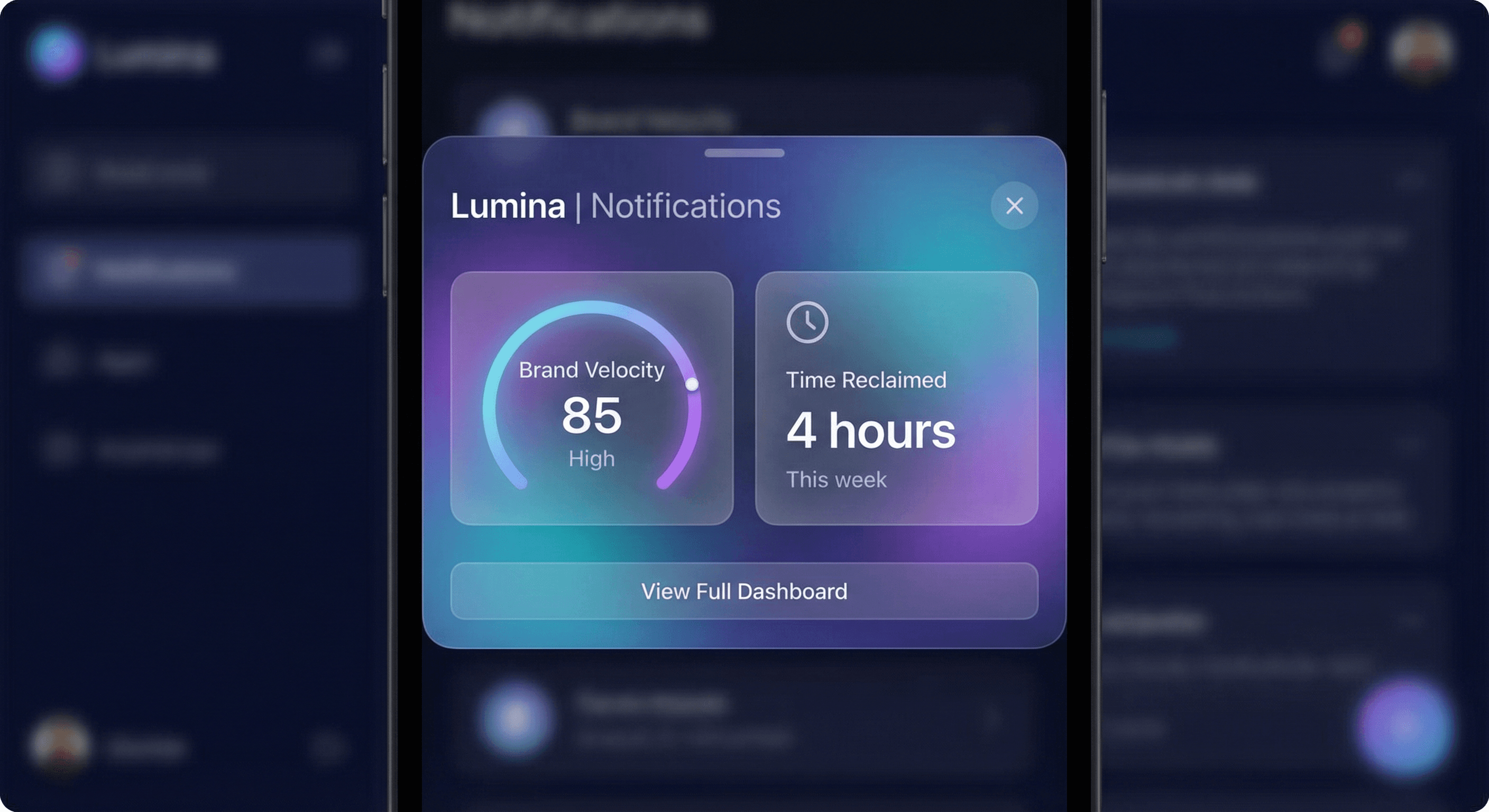
Autonomous monitoring of global trends, viral content, and competitor shifts. The system tracks signals across social platforms and the broader web, surfacing actionable insights so your brand stays aligned with what's working now. You can capitalize on opportunities and avoid stale messaging without manual research.
Generates cross-platform creative assets—social posts, ad creatives, and visual content—that adhere to a consistent brand voice and guidelines. Output is tailored to each channel (e.g., Instagram, X, Meta) while maintaining a unified brand identity. No more starting from a blank canvas or juggling multiple tools.
Adjusts brand messaging and tactics based on live user reactions and feedback loops. Your communications stay responsive and relevant as your audience evolves. When sentiment shifts or new pain points emerge, Lumina helps you pivot messaging and creative direction quickly.
A glassmorphism-inspired overview of your brand's health, reach, and every autonomous action. Metrics, proposed content, and trend alerts are organized in one place for fast decision-making. Review and approve in minutes instead of hours, with full visibility and control.
Frontend
Next.js 15 (App Router)
Styling
Tailwind CSS + Shadcn UI
Backend
Next.js (Full-Stack)
Database
Supabase (PostgreSQL + Auth)
Authentication
supabase-auth
Web (Browser)
Deployment
vercel
Deployment notes
US-East-1 region, automated CI/CD via GitHub, edge function execution for AI agents.
vs. Manual tools (Notion, Canva, spreadsheets): Lumina replaces ad-hoc workflows with an autonomous CMO. No direct subscription comparison—Lumina saves 10+ hours/week; $49–$199/mo is cheaper than a fractional CMO or freelance strategist.
vs. Social/marketing suites (Buffer, Hootsuite, Later): Those focus on scheduling and basic analytics. Lumina adds AI-driven strategy, trend monitoring, sentiment-based pivots, and on-brand creative generation. Lumina is positioned as a strategy-and-content layer above scheduling tools; pricing is in line with mid-tier social tools but delivers strategy automation they do not.
vs. Enterprise CMO/agency: Enterprise solutions are $2K–$10K+/month. Lumina targets solopreneurs and SMBs at $49–$199/mo, offering a clear value proposition: CMO-level automation at a fraction of the cost.
Value proposition by tier:
Tier descriptions (copy suggestions):
Feature comparison matrix suggestions:
| Feature | Solo | Scale |
|---|---|---|
| Market Pulse Monitoring | ✓ | ✓ |
| Autonomous Asset Engine | ✓ | ✓ |
| Sentiment-Driven Strategy | ✓ | ✓ |
| Brand Dashboard | ✓ | ✓ |
| Auto-pilot mode | — | ✓ |
| Multiple brands | — | ✓ |
| Team collaboration | — | ✓ |
| Priority support | — | ✓ |
Call-to-action recommendation:
$49/mo for Solo, $199/mo for Scale (includes auto-pilot mode).
Lumina's primary audience consists of digital creators, solo entrepreneurs, and small D2C (Direct-to-Consumer) brand owners aged 22–45. They are primarily concentrated in urban entrepreneurial hubs or operating as digital nomads.
Our users are digital natives comfortable with SaaS tools like Notion and Canva but overwhelmed by platform fragmentation. They prefer mobile-responsive web interfaces that prioritize ease of use over deep technical configuration.
Users engage in a Review & Approve cycle, spending ~20 mins daily reviewing Lumina's proposed agendas.
Success is defined by Brand Velocity (engagement + conversion growth) and Time Reclaimed (80% reduction in manual marketing tasks).
OpenAI (GPT-4.1) - For generative content and brand strategy automation
https://platform.openai.com/docs
Midjourney - For AI-generated visual assets and creative imagery
https://docs.midjourney.com
X (Twitter) API v2 - For social posting and audience engagement
https://developer.x.com/en/docs/x-api
Meta Graph API - For Facebook and Instagram social and ad management
https://developers.facebook.com/docs/graph-api
Stripe - For subscription billing and payments
https://stripe.com/docs
Google Analytics 4 - For analytics and performance tracking
https://developers.google.com/analytics/devguides/collection/ga4
Resend - For transactional and marketing email
https://resend.com/docs
Framer Motion - For fluid animations and dashboard micro-interactions
https://www.framer.com/motion/
Zod - For form and schema validation
https://zod.dev/
TanStack Query (React Query) - For server state and API caching
https://tanstack.com/query/latest
Lucide React - For consistent icon set across the UI
https://lucide.dev/
Recharts - For data visualizations and brand dashboard charts
https://recharts.org/
LangChain - For AI orchestration and LLM workflows
https://js.langchain.com/docs/
OpenAI API - For generative content and chat completions
https://platform.openai.com/docs/api-reference
X (Twitter) API v2 - For social posting and audience engagement
https://developer.x.com/en/docs/x-api
Meta Graph API - For Facebook and Instagram posting and insights
https://developers.facebook.com/docs/graph-api
Stripe API - For subscription billing and payment processing
https://docs.stripe.com/api
Google Analytics 4 Measurement Protocol - For analytics event tracking and reporting
https://developers.google.com/analytics/devguides/collection/ga4
Resend API - For transactional and marketing email delivery
https://resend.com/docs/api-reference
Modern, futuristic, clean. Glassmorphism-inspired with a premium SaaS feel. High-contrast and fluid.
Primary: Deep indigo (#1E1B4B) for backgrounds. Secondary: Slate grays for surfaces. Accent: Neon violet (#7C3AED) for CTAs and key UI; cyan (#06B6D4) for data and highlights. Use 10–15% opacity overlays for glass panels.
Headings: Space Grotesk (bold, tracking-tight). Body: Inter (readable, 15–16px). Use clear hierarchy: 24–32px for hero, 18–20px for section titles, 14–15px for body. Monospace only for code or IDs.
Rounded corners (8–12px) for cards and buttons. Soft shadows (e.g. 0 4px 20px rgba(0,0,0,0.08)) and subtle borders (1px, low opacity). Glassmorphism panels: backdrop-blur with light borders. Buttons: filled primary (violet), ghost secondary.
Glassmorphism (frosted panels, blur, transparency). Subtle gradients on key surfaces. Fluid, physics-based micro-animations for data and state changes. Avoid heavy skeuomorphism; keep flat with depth via shadow and blur.
Mobile-first. Breakpoints: 640px (sm), 768px (md), 1024px (lg), 1280px (xl). Dashboard and tables collapse to cards or single column on small screens. Touch targets ≥44px. Typography scales down on mobile; preserve hierarchy.
Support both. Light: indigo-50/100 backgrounds, violet and cyan accents. Dark: indigo-950/900 backgrounds, same accent hex with higher contrast. Ensure WCAG AA for text. Toggle in header or settings.
A futuristic, clean Glassmorphism aesthetic. Deep indigo (#1E1B4B) backgrounds with neon violet (#7C3AED) and cyan (#06B6D4) accents. High-contrast typography using Space Grotesk for headings and Inter for body text. Fluid, physics-based micro-animations for data visualizations.